
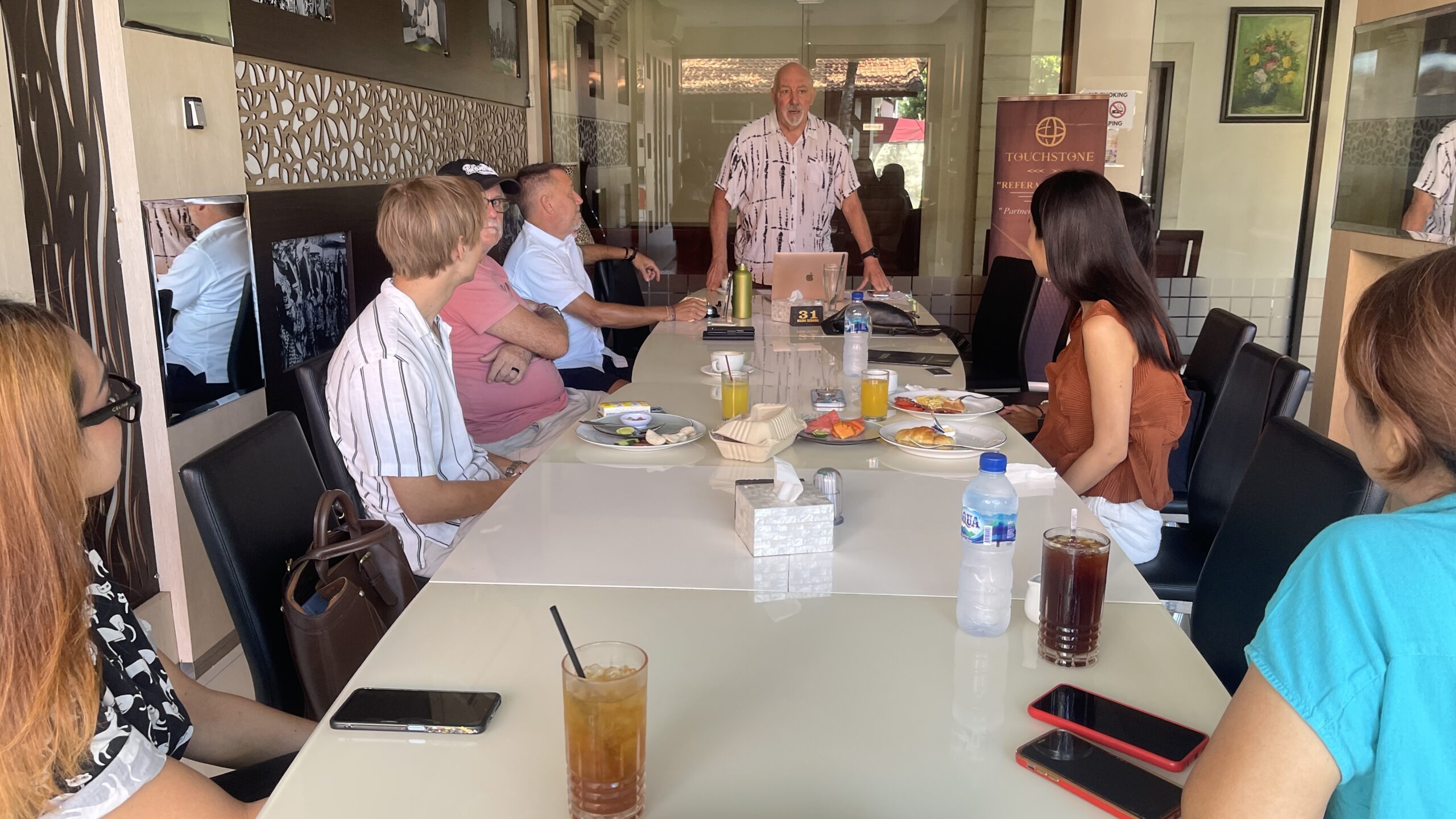
Date: August 21, 2025
Location: Sanur, Bali
As international interest in Bali’s property market continues to grow, many foreign investors encounter a complex landscape shaped by Indonesian land law, nominee risks, zoning regulations, and evolving compliance frameworks. While the island’s property opportunities remain attractive, long-term outcomes often depend less on the property itself and more on the legal structure surrounding ownership and usage rights.
This Touchstone private briefing was convened to address these structural considerations directly.
A small group of investors, founders, and professional advisors gathered to examine how property decisions intersect with governance, taxation, and regulatory compliance in Indonesia. Rather than discussing speculative opportunities or short-term market trends, the conversation focused on the frameworks that determine whether property positioning remains secure over the long term.
Participants explored how different ownership structures operate within Indonesian law, including the distinctions between Hak Pakai arrangements, corporate ownership vehicles, and long-term lease structures commonly used by foreign participants. The session also addressed the risks that can emerge when property arrangements rely on informal agreements or nominee relationships that lack proper legal documentation.
Another important topic was the relationship between property positioning and broader relocation strategy. Many individuals initially view property acquisition as a standalone lifestyle decision, only to discover later that it interacts with visa status, tax residency, and corporate presence in ways that were not fully considered.
The discussion highlighted how experienced operators tend to approach property decisions as part of a broader structural plan rather than as isolated transactions. Legal advisors, tax professionals, and compliance specialists often play a crucial role in ensuring that property arrangements align with the individual’s wider financial and operational objectives.
The briefing also explored how Bali’s property landscape continues to evolve as infrastructure development, regulatory adjustments, and international demand reshape certain areas of the island. Participants examined how disciplined investors evaluate these changes while avoiding speculative narratives that often circulate in informal expatriate networks.
By maintaining a limited attendance format, the session allowed for open discussion among individuals managing cross-border assets and long-term regional positioning.
• Indonesian land ownership frameworks and foreign participation
• Long-term lease structures and governance considerations
• Property positioning within broader relocation strategies
• Regulatory risks associated with nominee arrangements
• Aligning property assets with tax and residency frameworks
Participants left the briefing with a deeper understanding that property decisions in Bali cannot be separated from governance, legal structure, and long-term planning. When these elements are properly aligned, property can become a stable foundation for regional presence. When they are overlooked, the same assets can introduce unnecessary complexity and risk.
The discussion reinforced the importance of approaching Bali not only as a lifestyle destination, but as a jurisdiction requiring disciplined structural alignment for those seeking lasting presence in the region.