
Relocation & Lifestyle · 21 November 2026
Bali's Beach Rubbish Season: Why It Happens, Which Beaches Are Affected and How to Help
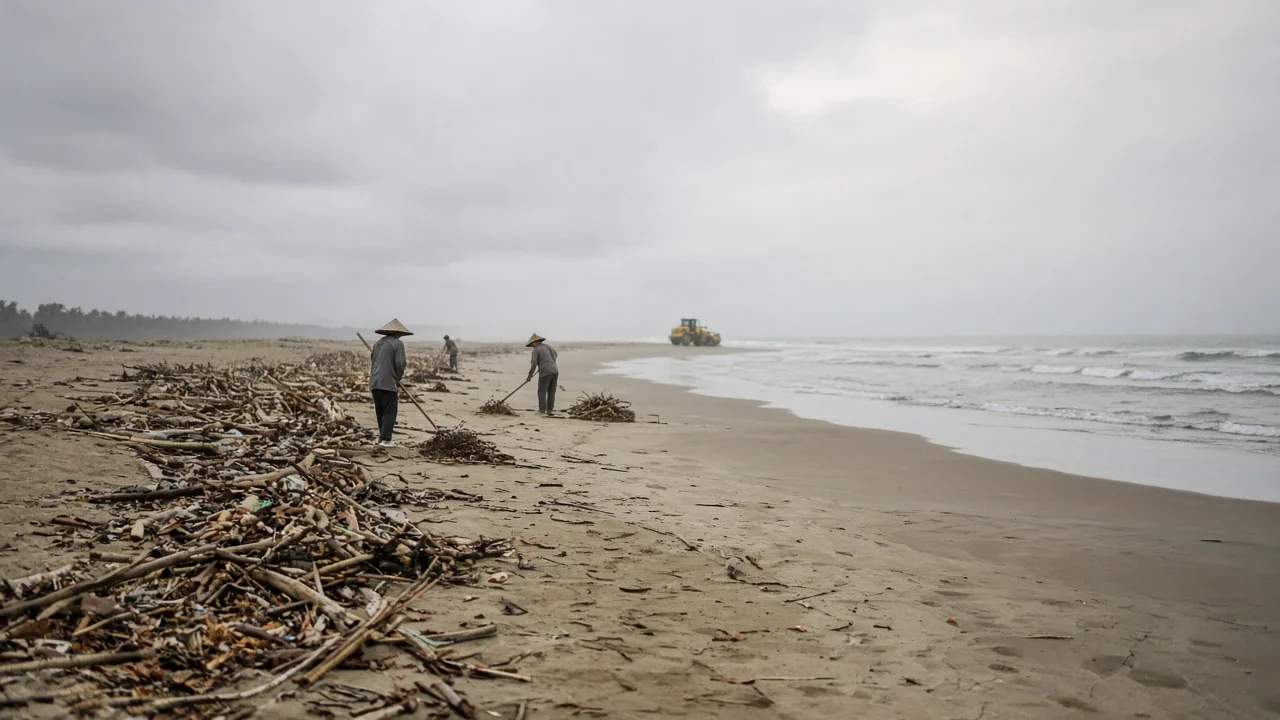
Walk onto Kuta Beach early on a morning in the wet season and the shoreline can look very different from the postcard. A line of driftwood, bamboo and branches sits along the high tide mark, a loader works its way down the sand and cleaning crews rake what the night's waves brought in. By the time most visitors arrive, much of it has often been cleared away.
Locally this is called sampah kiriman, which translates roughly as "sent rubbish" or rubbish that arrives from elsewhere. It returns every year with the west monsoon, and the 2026/27 season has already begun. This guide explains what it is, why it gathers on Bali's south west coast, which beaches officials say are affected, how the clean up works and what residents and visitors can usefully do.
Quick answer
Bali's beach rubbish season is an annual event linked to the west monsoon and the rainy season. Heavy rain washes waste from rivers into the sea, and winds and currents carry it to the south west coast, where Kuta acts as a natural collection point. Badung's environment and sanitation agency (DLHK Badung) says it usually starts in late October or November and mainly affects the west coast of Badung, from Pererenan and Canggu through Legian and Kuta to Kedonganan and Pecatu. Beach managers say it can continue until March. Most of the material is wood, branches and bamboo, with plastic bottles and packaging mixed in. Crews clean daily, typically starting in the early morning, and around 200 tonnes had been collected from Badung's beaches between 5 and 19 November 2026.
Key takeaways
The first debris of the 2026/27 season reached Seminyak, Legian and Kuta in early November, and the volume has been rising since.
The rubbish is mostly organic: logs, twigs, leaves and bamboo. Plastic is a smaller share but still turns up.
Kuta's beach managers say joint clean ups usually begin at around 07.00 WITA, with extra sweeps whenever new debris lands after high tide.
Last season, DLHK Badung reported handling about 3,000 tonnes of marine debris by early February 2026, and said the yearly total averages 4,000 to 7,000 tonnes.
Researchers trace the debris to rivers in west Bali and to the Bali Strait and east Java coast, so beach clean ups only treat part of the problem.
What "sampah kiriman" actually is
The phrase describes waste that is carried to a beach by the sea rather than dropped there by beachgoers. In Bali it usually means the debris that lands on the south west coast during the west monsoon, when wind, waves and currents change direction.
This is different from everyday litter. A beach can be well kept by its own community and still be covered in debris after a single high tide in January, because the material may have travelled from a river mouth many kilometres away, or from across the strait. That is why local officials describe the problem as one that crosses administrative borders and cannot be solved by one agency alone.
Why it happens
The pattern has two parts: rain on land and movement at sea.
During the rainy season, rivers carry fallen wood, vegetation and any rubbish left along their banks down to the coast. A DLHK Badung official explained at the start of last season that sustained, heavy rain was pushing more river waste into the sea before currents brought it to Badung's shore.
At sea, the west monsoon then does the rest. In a 2021 discussion hosted by Bali's provincial planning agency (Bappeda Bali), a marine researcher from Universitas Udayana described Kuta as a natural convergence zone for floating debris, a role he said the beach has played for hundreds of years. According to his research, material from the Bali Strait, the coasts of Sumatra and east Java, the Banyuwangi area and west Bali's own regencies can all end up there. His team tracked floating debris with GPS fitted buoys and estimated a journey of roughly 30 to 40 days from the waters off Banyuwangi to Kuta.
The same research identified rivers in west Bali as major local sources, naming Tukad Ijo Gading in Jembrana, Tukad Penet, and Tukad Sungi in Tabanan. Its recommendation was that beach clean ups should be matched by river clean ups in every village, covering streams, irrigation channels and drains that feed into rivers.
Which beaches are affected
Officials consistently point to the west facing coast of Badung. The table below summarises what has been reported this season and last.
AreaWhat has been reportedPererenan and CangguNamed by DLHK Badung in October 2026 as part of the stretch usually affected. Last season, officials said wood was also landing further up the coast at Cemagi and Berawa.Seminyak and LegianUsually the first beaches to receive debris at the start of the season, according to DLHK Badung. Debris began landing there in early November 2026.KutaThe main collection point. This season the beach manager reported debris concentrating near the tsunami shelter, Beachwalk and the skate park.Pantai Jerman, Kedonganan and JimbaranAmong the first beaches affected last season, alongside Kuta. DLHK Badung collected about 90 tonnes in the nine days to 2 December 2025.PecatuNamed by DLHK Badung as the southern end of the usually affected coast.
This is not a ranking of clean and dirty beaches, and conditions can change from one tide to the next. Officials have not said which other parts of Bali are unaffected, so it is better to look at conditions on the day than to rely on an old photograph or review.
The 2026/27 season so far
28 October: DLHK Badung said it had placed around 800 personnel along the coast, with 100 dump trucks and heavy equipment on standby, although no significant debris had yet arrived.
2 to 4 November: Wood and branches began landing at Seminyak, Legian and Kuta. DLHK Badung moved 13 truckloads, or about 26 tonnes, in two days and said around 900 cleaning staff were ready.
11 November: Kuta's beach manager said debris was arriving more steadily but volumes were still relatively low.
19 November: DLHK Badung said about 200 tonnes had been collected from Badung's beaches since 5 November, with 20 trucks and two loaders assigned to Kuta and its surroundings.
Last season, Kuta's beach manager confirmed in the week of 20 January 2026 that the volume of wood arriving was the heaviest yet. The end of the year is often only the start.
What the debris is made of
Most of what washes up is organic. DLHK Badung describes the material landing at Kuta as mainly wood, twigs, leaves and bamboo, and at the start of the season it also listed logs and coconut waste. Plastic is not the largest share, but crews still find bottles and single use packaging mixed in with the wood.
That mix shapes how the waste is handled. Wood is taken to the integrated waste processing site (TPST) at Mengwitani to be shredded with wood chippers, while the remaining residue goes to the regional landfill at Suwung. It also explains why a beach can look dramatic without the debris being mainly plastic.
How the clean up works
For the current season, DLHK Badung has divided the coast into five operational zones, each with temporary collection points coordinated with land managers. The agency's principle, in its own words, is that debris should be handled as soon as it lands, because waste left on the sand for too long can be pulled back out by the currents and carried to another beach.
On Kuta Beach itself, the manager says joint clean ups usually start at around 07.00 WITA, with the timing adjusted to the tides, and that crews sweep again whenever new debris appears. Under normal conditions DLHK Badung says a beach can be cleared within a day, while a large surge is handled in stages. Large logs are lifted by heavy equipment, and smaller material is cleared by local workers and the community. Beach traders are also asked to clean the area around their stalls.
The local district head for Kuta has stressed that the agency cannot do this alone, and that the cooperative, many hands approach known as gotong royong, involving residents, beach managers and tourism businesses, remains effective when large volumes arrive.
What it means if you live nearby or are visiting
None of this needs to spoil a stay.
Expect variation from day to day. A beach may be covered after a night of high tides and largely clear by mid morning. If you have a choice of timing, a quick look before you commit to a long beach day is worth it.
Give machinery and crews room. Loaders and trucks work on the sand during clean ups. Keep children and pets clear of them, and follow any instructions from beach staff.
Look at the water before you swim. Wood comes in with the waves, so it is sensible to check the surf and follow lifeguard flags and advice.
Plan beach events with the season in mind. If you are organising a photo shoot, a celebration or a ceremony on the south west coast between November and March, ask your venue how it manages debris and build in some flexibility.
Set expectations for guests. Villa owners and hosts near Canggu, Seminyak, Legian and Kuta may find it helpful to mention the season to visitors before they arrive, rather than leaving them to discover it.
Remember the holidays overlap. The busiest weeks of the year fall within the rubbish season, so popular beaches may be crowded and in the middle of clean up at the same time.
What residents can do
Because much of the debris starts on land, the most useful contributions often happen away from the beach.
Keep waste out of drains and rivers. Rubbish left in a roadside channel can travel to a river and on to the sea in a single storm. Keeping the drains around your home clear is good flood preparation as well; our rainy season guide covers this in more detail.
Cut back on single use plastic. Bali has had a provincial regulation since December 2018, Governor Regulation No. 97 of 2018, which limits three types of single use plastic: plastic bags, polystyrene (styrofoam) and plastic straws. Carrying a reusable bag and bottle is a small habit, but it reduces the plastic share of what reaches the sea.
Join an organised clean up. River and beach clean ups take place across Bali, often coordinated by the local village (desa or banjar), schools or community groups. One example is Sungai Watch, an organisation that installs trash barriers on rivers and has run weekly volunteer clean ups since April 2022, with registration open on its website. Joining an organised group is usually more effective than collecting on your own, because the waste has to be sorted and taken somewhere.
Ask good questions locally. Neighbours, your banjar and long term residents often know which stretches of coast are worst in which weeks. As with any local advice, it is a starting point to check against official information, a theme we explore in Beyond the Bali Facebook Group.
Frequently asked questions
When does Bali's beach rubbish season start and end?
DLHK Badung says the debris usually starts to appear in late October or around November. Kuta's beach manager says it typically continues until March. One DLHK official described a wider annual window of September to March, so timing varies from year to year.
Is the rubbish caused by tourists?
Not mainly. Officials and researchers describe it as debris brought in by the sea, much of it vegetation carried down rivers in the rain, together with waste from the Bali Strait and beyond. Litter left on the beach is a separate issue, although it adds to the problem.
How much rubbish arrives each year?
DLHK Badung said in February 2026 that the yearly volume of marine debris on its coast averages 4,000 to 7,000 tonnes, and that about 3,000 tonnes had been handled by early February in Kuta, Kedonganan and Jimbaran last season.
Where does the collected rubbish go?
Wood is shredded at the Mengwitani waste processing site, and the remaining residue is taken to the Suwung regional landfill.
Continue exploring
Bali's 2026/27 rainy season: a practical guide for residents, renters and villa owners
Christmas and New Year in Bali 2026/27: a practical guide to dates, crowds and travel
Beyond the Bali Facebook Group: finding advice you can trust
Getting to know the island through its seasons
The rubbish season rarely appears in travel brochures, but it soon becomes familiar to anyone who stays a while. If you are settling into Bali, or thinking about where on the island suits the way you want to live, you are welcome to start a conversation with Touchstone about your circumstances.
By Touchstone Bali. Published 21 November 2026. Figures are taken from official statements and press reports at the time of writing; conditions on individual beaches change daily.
References
Sampah Kiriman Mengintai Pantai di Badung, 800 Personel dan 100 Dump Truck Disiagakan, Bali Post, 28 October 2026.
Sampah Kiriman Mulai Muncul di Pesisir Samigita, NusaBali, 4 November 2026.
Sampah Kiriman Mulai Intens Menepi di Pantai Kuta, Warta Bali Online, 11 November 2026.
Angin Barat, DLHK Badung Kumpulkan 200 Ton Sampah Kiriman di Pesisir Kuta, detikBali, 20 November 2026.
Sampah Kiriman Mulai Meningkat, DLHK Badung Siapkan Strategi Penanganan, Bali Post, 2 December 2025.
Pantai Kuta Bali Dipenuhi Sampah Kiriman, Kayu Paling Banyak, Kompas.com, 20 January 2026.
Musim Angin Barat, 3.000 Ton Sampah Laut Serbu Pesisir Badung, Menitini, February 2026.
Peneliti Prediksi Sampah Mulai Masuk Pantai Kuta Pertengahan Desember, Bappeda Provinsi Bali, November 2021.
Peraturan Gubernur Bali Nomor 97 Tahun 2018 tentang Pembatasan Timbulan Sampah Plastik Sekali Pakai, JDIH Provinsi Bali.
Cleanups, Sungai Watch.